

Falerio Picenus Archaeological Park: History and Culture
Falerio Picenus: Art, History and Culture in Ancient Falerone
Welcome to the Falerio Picenus Archaeological Park: a journey through Roman history
The Falerio Picenus Archaeological Park was established in 1994 with the main goal of preserving the area’s splendid archaeological heritage and its historical and environmental context. The park is unique in the region: it is a scattered archaeological park integrated into the modern town of Piane di Falerone. In fact, while the theater, the amphitheater, and the Bagni della Regina (a monumental cistern) are located in isolated areas along three invisible town boundaries on the Faleriense road, once you enter the village, you can admire other monuments–a beautiful sarcophagus, the probable podium of a temple, impressive substructures, a cistern, various reuses of ancient elements–still living in a curious symbiosis with the modern inhabitants.
What to Visit
THE THEATRE
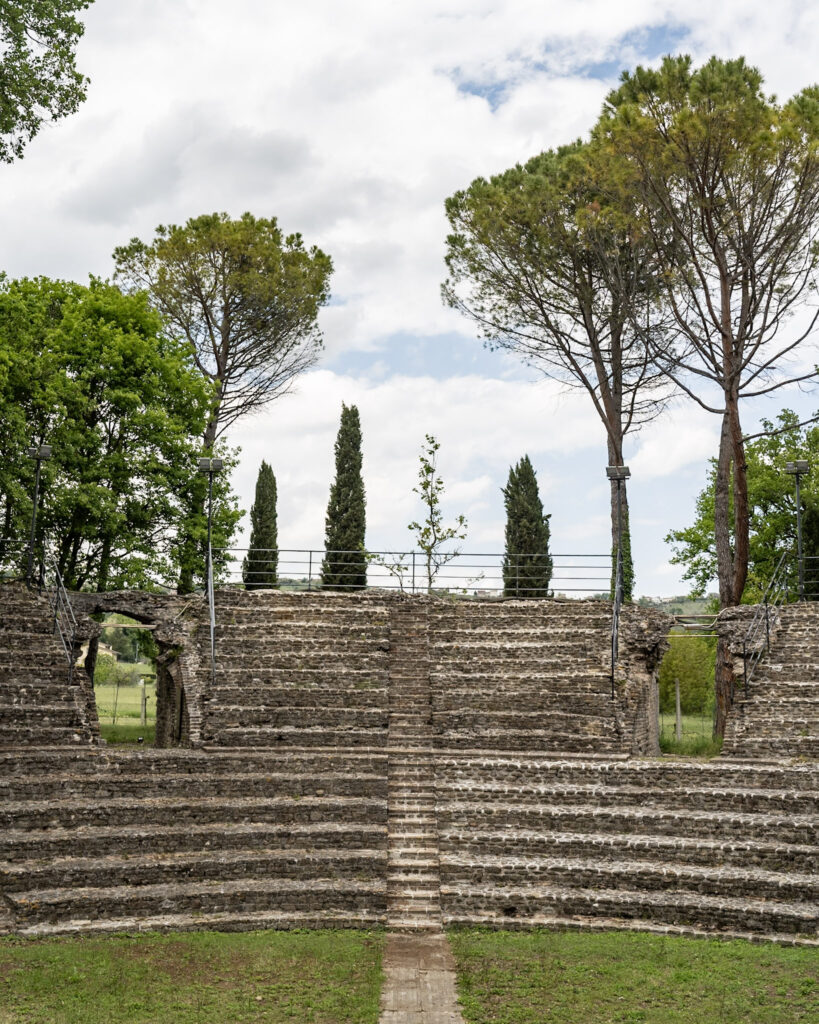
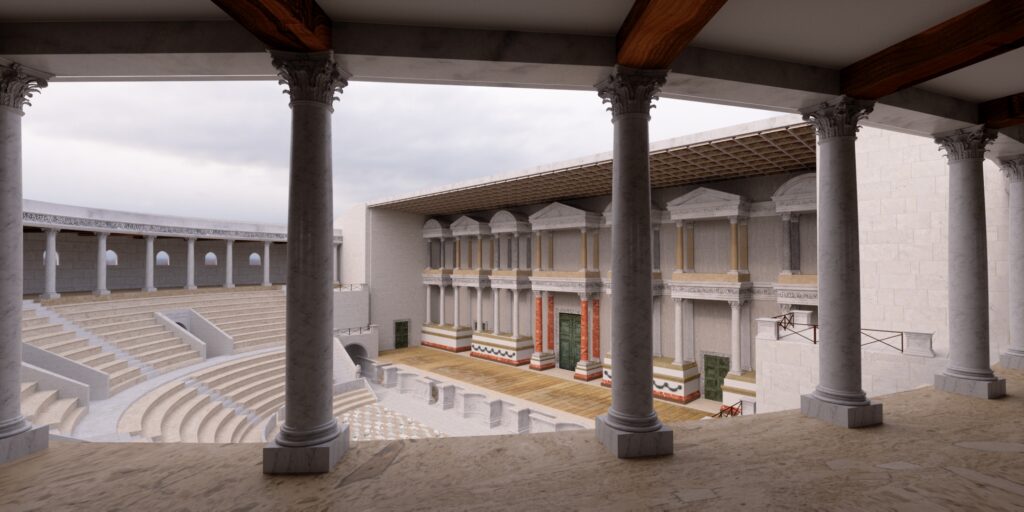
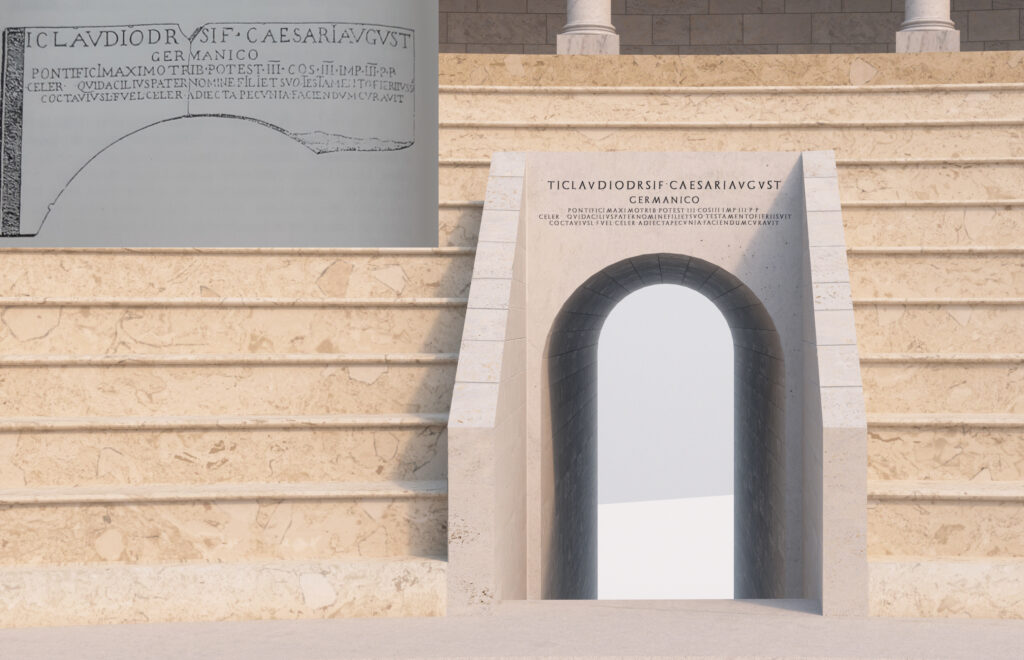
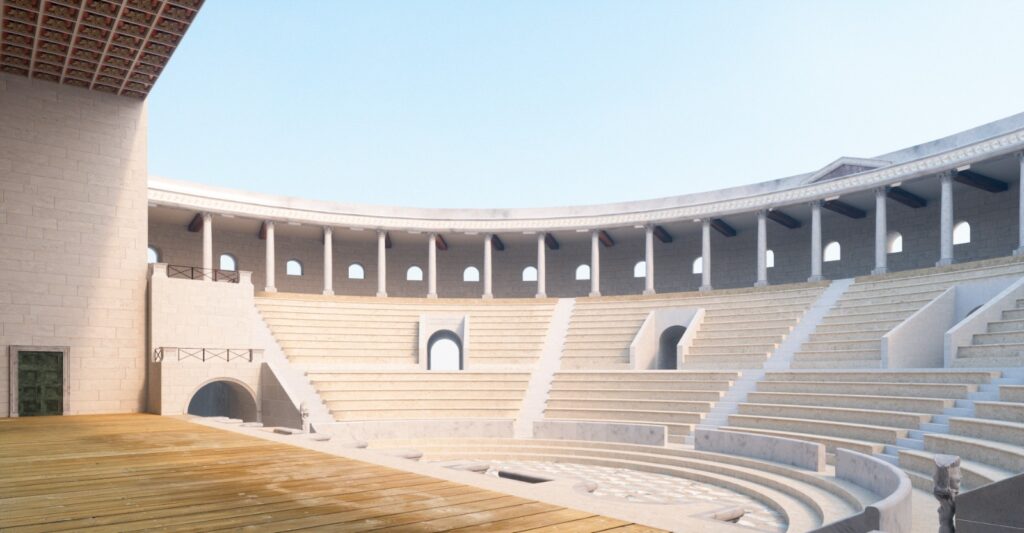
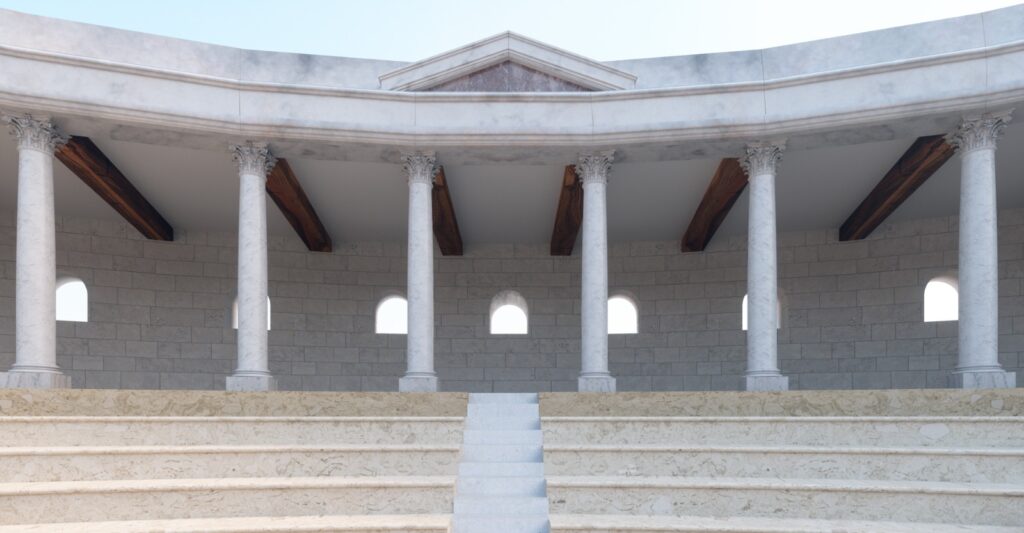
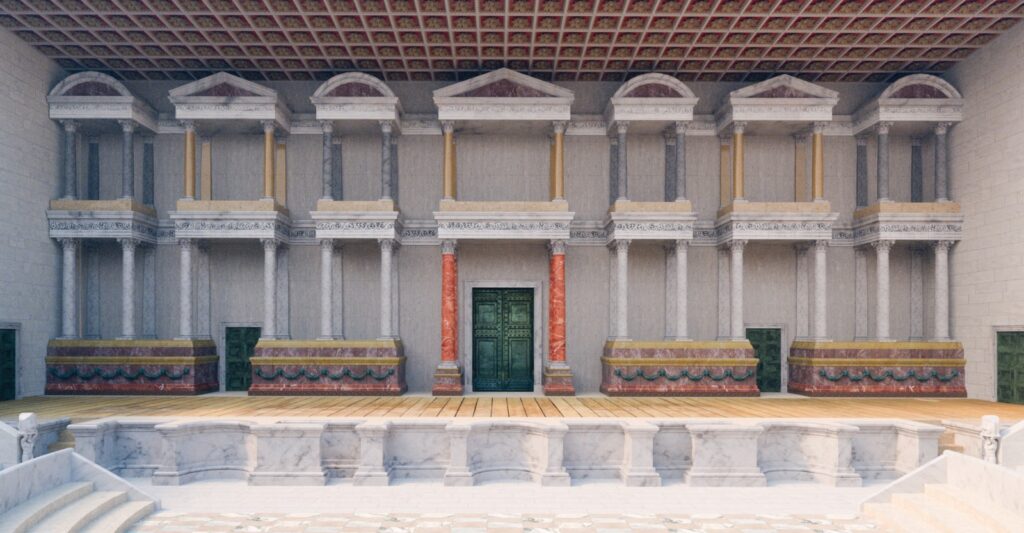
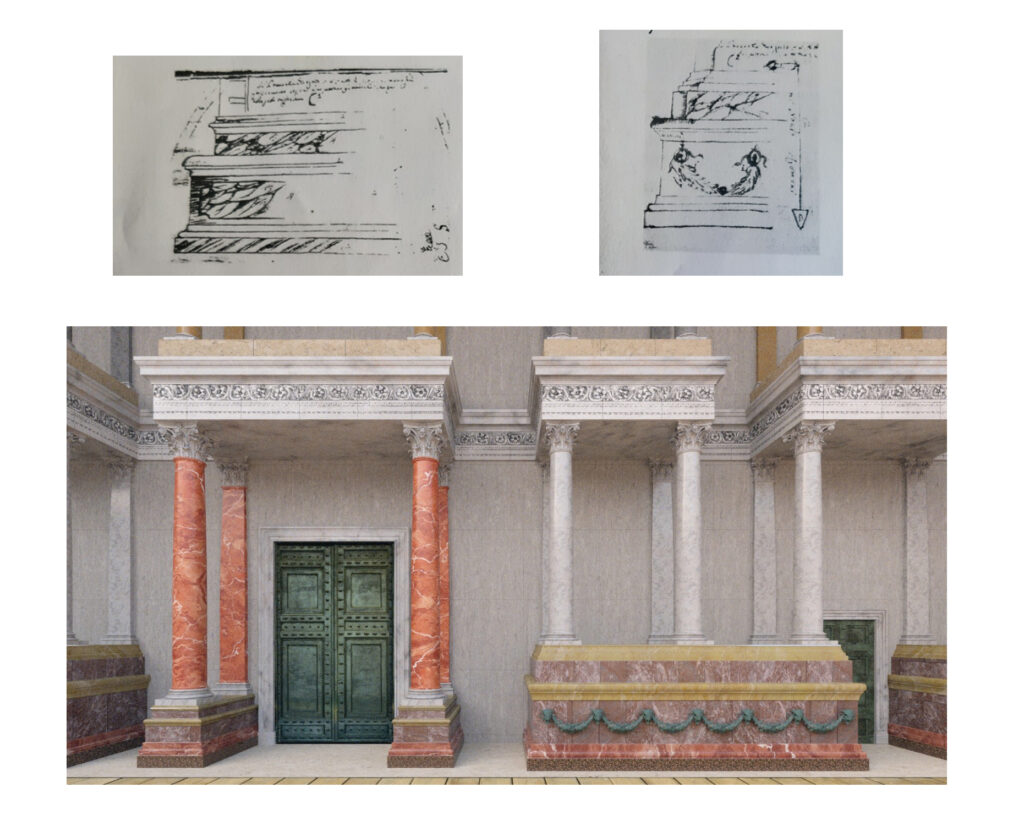
The theatre of Falerio Picenus has always been the main attraction of the archaeological area, and for good reason. Still used for a varied program of performances, it is the smallest Roman theatre in the Marche region (cavea measuring 39 m and orchestra of 18 m), and maybe the best preserved. Based on its construction techniques, the structure—dates back to the Augustan age, when the town underwent a major phase of monumentalisation. In Augustus’s political propaganda programme, theatres played a key role; however, the building continued to be embellished for centuries, under Emperor Claudius (41-54 CE), Commodus (177-192 CE) and Probus (276-282), as attested by epigraphs found in the theatre itself and surrounding areas. In the second half of the 2nd century CE, a local priestess, Antonia Picentina, completed the decoration of the theatre with a series of statues. Although we do not know exactly which statues were installed, epigraphs, fragments of statues themselves, and descriptions by early excavators in the 18th and 19th centuries indicate that there were two sculptural cycles: one dedicated to the gods and the other to the imperial family.
The structure was magnificent, one must imagine it covered with precious marbles from across the empire, brightly colored stuccoes, and adorned with some replicas of the most famous statues of the ancient world, including the famous “Augustus of Prima Porta” and a Venus like the one from Milo! One of Falerone’s statues is now exhibited in the Louvre! We say “one must imagine,” but thanks to the RAV60 project (Municipality of Falerone with funding from the Marche Region, Studio 111 by L. Tampieri and G. Canuti, scientific advisor P. Storchi), it is now possible to experience all this through an evocative, immersive three-dimensional reconstruction, particularly fascinating when viewed on site.
THE AMPHITHEATRE
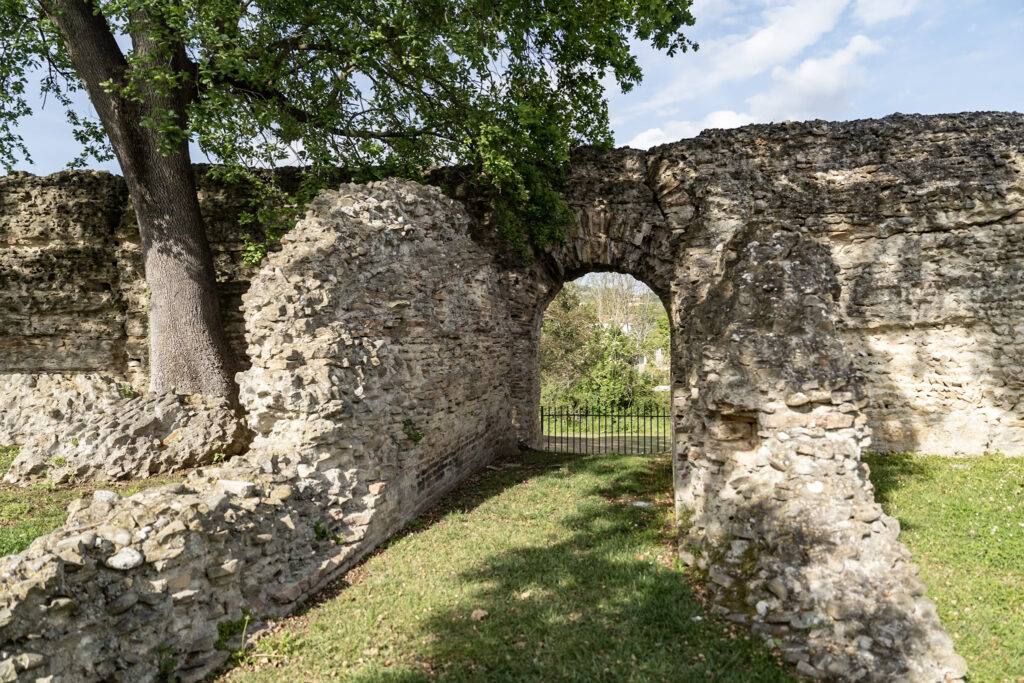
Unlike the theatre, which is almost entirely preserved, not much remains of Falerone’s amphitheatre—the venue for bloody spectacles, where beasts and men clashed, extraordinary athletes dueled, and executions took place. Over time, it was sadly despoiled not only of its fine decorations but even of its bricks, which were reused in the houses of the modern town. Today, only part of the concrete core survives—roughly half of it, and only the outer ring. Despite this, the care shown by local inhabitants and administrations has turned the site into a small jewel to be admired. Thanks to the three-dimensional reconstruction, it is now possible to “see” what the amphitheatre once looked like.
Originally, the structure had an elliptical shape—more precisely, a polycentric curve, considered ideal for allowing all spectators to view the performances taking place at the centre of the arena—and it was an imposing building measuring approximately 92 × 80 m. It was probably built in the 1st century CE, perhaps in the Julio-Claudian age (first half of the 1st century CE).
The portion of the building preserved today abuts a hill evocatively known as “Campidoglio”. Only parts of the outer wall remain, together with some radial walls that once supported the seating tiers, the main entrances (aditus maximi—the eastern one, better preserved, was 3.60 m wide) and sections of the vomitoria, the tunnels that allowed public access to the seating tiers. The discovery in the area of marble and tuff columns confirms that the structure was originally very elegant.
THE “BAGNI DELLA REGINA”
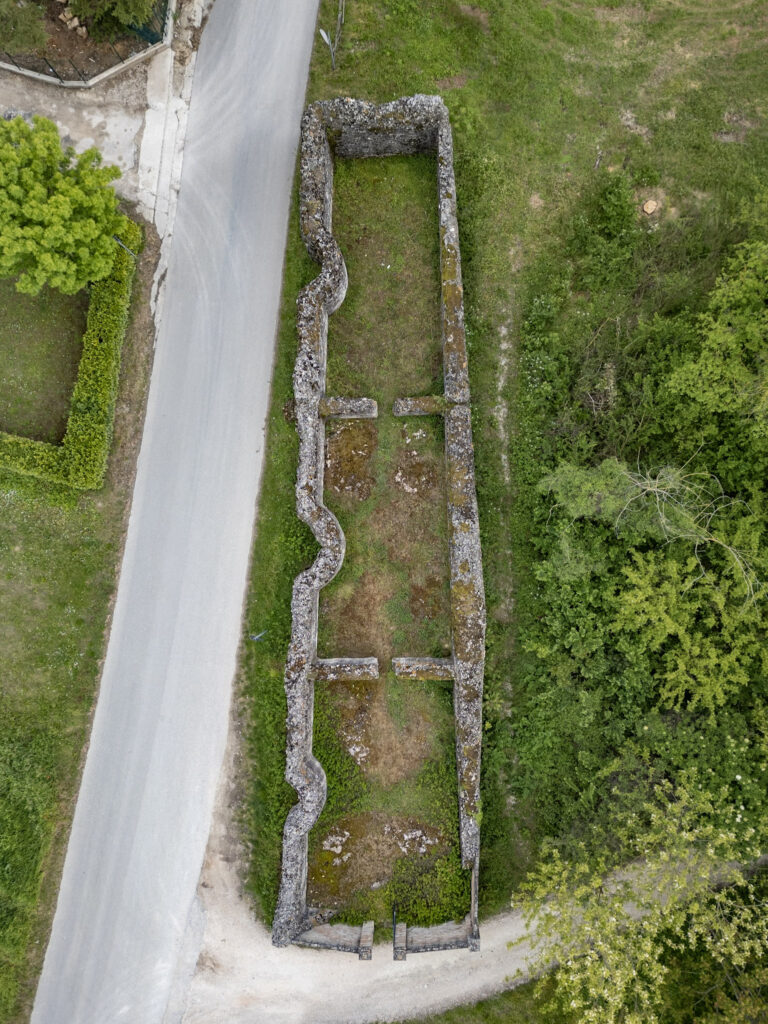
Along Via del Pozzo, just outside the village on the left, it is impossible not to notice a very peculiar structure, slightly set back from the road and featuring three niches on its façade.Positioned at a functional point yet endowed with extraordinary visibility,the building must once have been magnificent. Its appearance stirred the popular imagination, which associated it with water and interpreted it as part of baths meant to satisfy the leisure of a mysterious, almost phantom queen belonging to a dreamed-of past, a nebulous and indefinable time. Thus was born the toponym that still identifies the building today: “Bagni della Regina” (The Queen’s Baths).
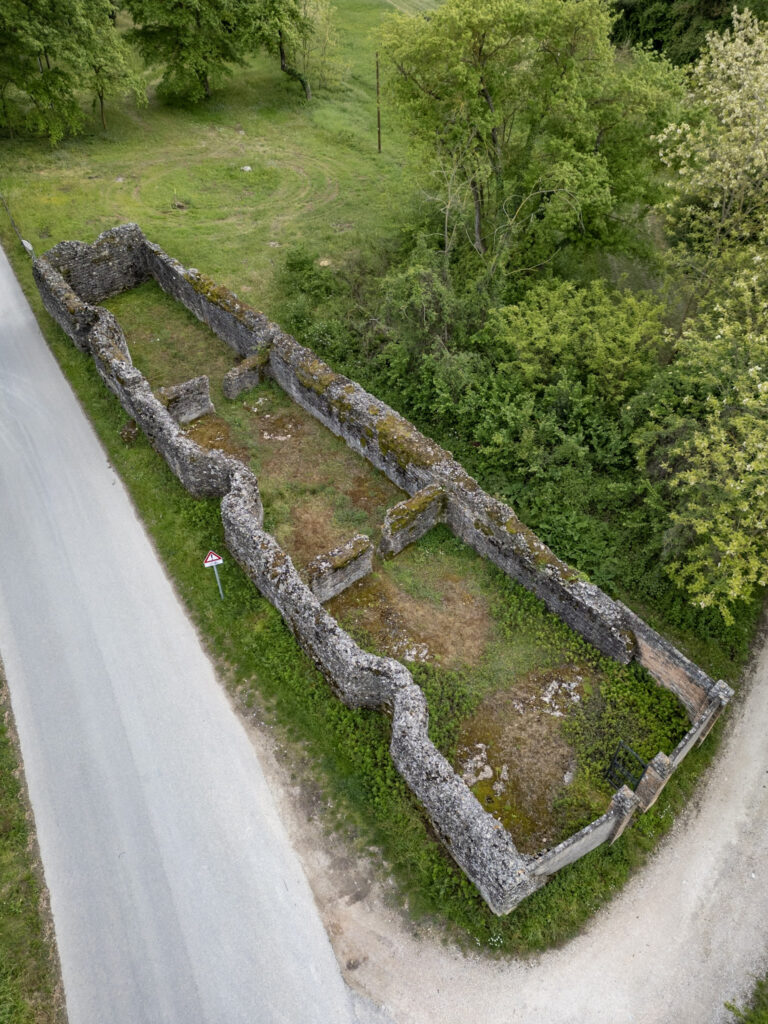
Leaving this fairy-tale world behind and turning to a more analytical view, the structure consists of three interconnected chambers arranged from northwest to southeast along Via del Pozzo, with a total length of 32.4 m. A fourth room at the southeastern end proved to be independent from the other three and probably served as a storage room. The three main chambers are coated with hydraulic lime, making them impermeable. This structure was the end point of the Falerio Picenus aqueduct: here the water decanted into the chambers before resuming its course—now purified—downward toward the theatre, amphitheatre, forum, and residential areas. The ancient Romans referred to such a structure as a “Castellum Aquae.” The distinctive construction technique—alternating rows of bricks and river pebbles with layers of mortar—is very similar to that observed in the theatre. It is therefore likely that the two buildings are roughly contemporary and can both be attributed to the monumentalisation of the town during the Augustan period.
Given its scenic location along an ancient Roman road out of town(Via del Pozzo), the building must have had a monumental appearance. It was likely adorned with marble, covered by a vault, and the three niches facing the street housed statues and, perhaps, water features, as suggested by the three-dimensional reconstruction.
THE CHURCH OF SAINT PAOLINO
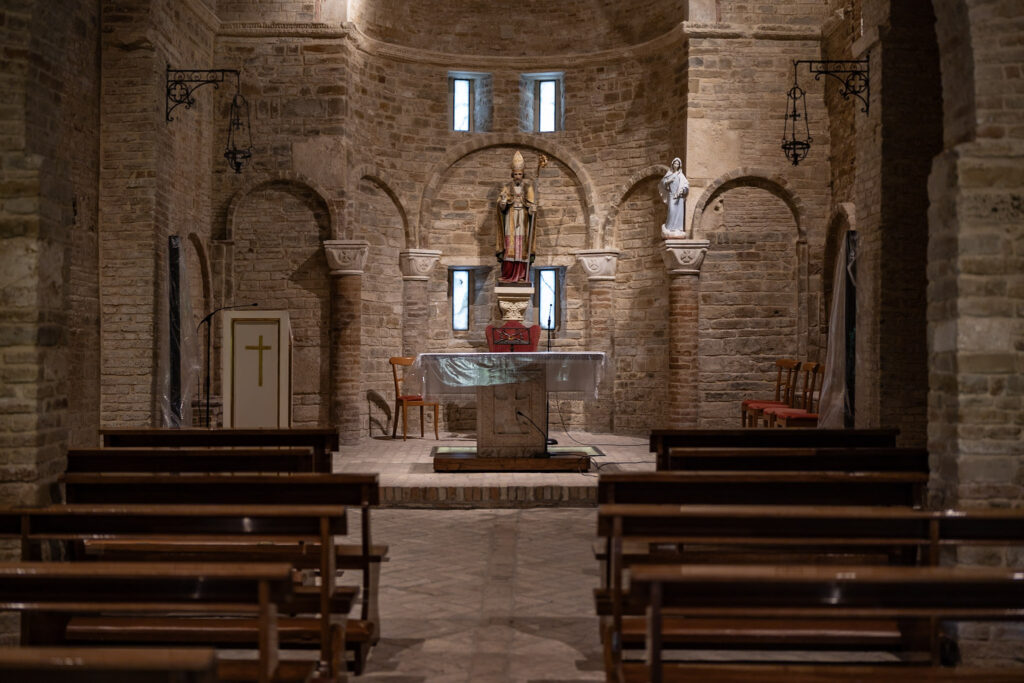
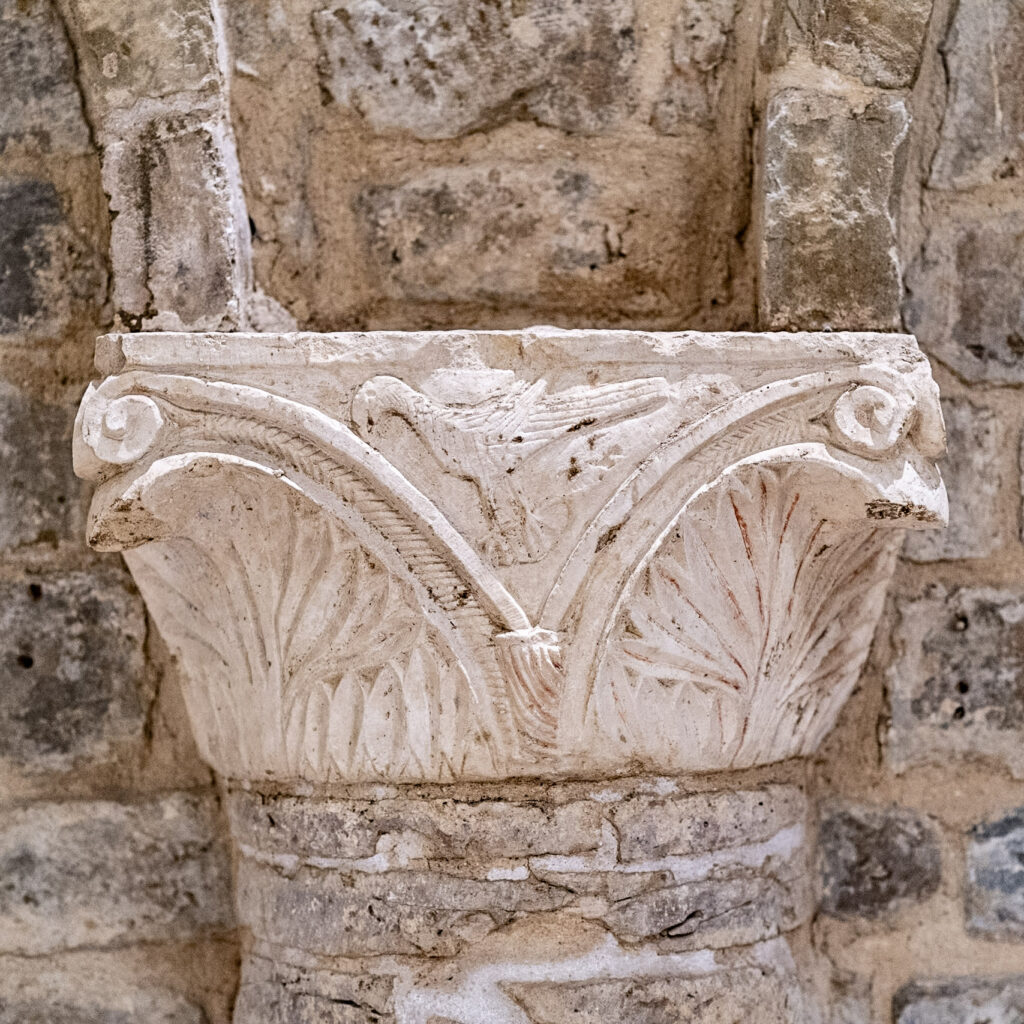
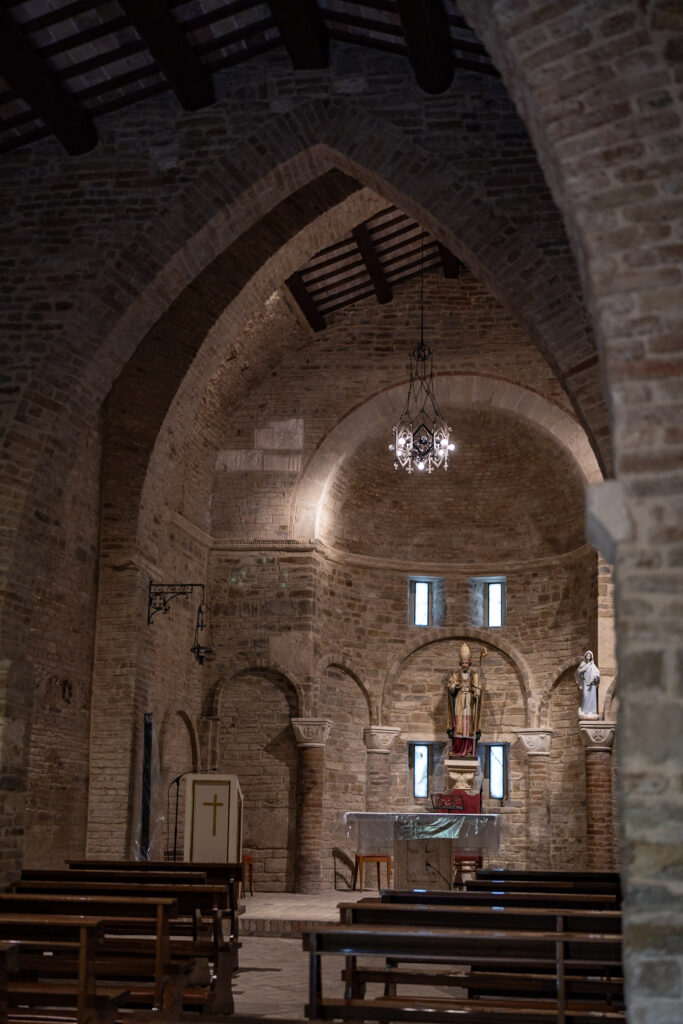
About 2 km from Falerone, you can admire the rural church dedicated to St. Paulinus. Its overall form is fully medieval, but it is probably of Lombard origin and may have once been surrounded by a burial ground for this warrior population, as suggested by the reuse of the Volveto inscription as an altar slab, which commemorates King Desiderio and Adelchi. Despite its simple in form, the structure is adorned with fine stone tiles bearing knots of Solomon and St. John, flowers of life, stars of various shapes, and a rare bicaudate mermaid.
BIBLIOGRAPHY
P. Bonvicini (1991). Falerone. Dall’antichità al Medioevo… Gli scavi archeologici di Falerio Picenus.
E.Giorgi, F. Grilli, P. Storchi ( January/February, 2021). Falerio Picenus. Hic incipit vita nova, in Archeologia Viva.
F. Grilli, P. Storchi, P. Blockley, G. Guarino, G. Mete ( Proceedings of the III International Conference on Aerial Archaeology May 19-21, 2022). Falerio Picenus: Aerofotointerpretazione e geofisica per una nuova immagine della città antica.
L. Maraldi (2002). Falerio (Atlante tematico di topografia antica, XIII supplemento. Città Romane 5).
G. Montali. (2015). “I fratelli De Minicis e la riscoperta del teatro di Falerone: spigolature architettoniche” in G. Paci (ed.),I fratelli De Minicis. Storici, archeologi e collezionisti del Fermano.pp. 51-80.
G. Paci (ed.). (1995). Scritti su Falerone romana, Picus Suppl. V.
Paci-Landolfi. (2002): G. Paci, M. Landolfi, “Falerone, (AP),” in Picus, XXII, pp. 313-322.
P. Storchi. (2021, 2023). The 3D reconstruction model of the Roman theatre of Falerio Picenus (Falerone, Italy): promoting cultural heritage, understanding our past, in GROMA. pp. 106-131.
P. Storchi, Falerio. (2022). Picenus: satellite discovers new neighborhoods, in Archaeologia Viva News February: https://www.archeologiaviva.it/18787/falerio-picenus-il-satellite-scopre-nuovi-quartieri/

