
Falerio Picenus Archaeological Park: History and Research
Exploring the Falerio Picenus Archaeological Park: from Roman roots to modern discoveries
History of the district
Before Rome and the ancient road system
We find ourselves in the heart of the Picenian territory, a short distance from centres that have yielded extraordinary artifacts and structures—such as Belmonte Piceno, Grottazzolina, Montegiorgio and Fermo, the latter inhabited by the earliest Etruscans (the Villanovan people). Yet Falerio remains silent for this chronological phase, apart from the discovery of sporadic finds which, given the current state of knowledge, allow us only to hypothesise a limited or intermittent occupation of the area.
The first certain information about the area dates from 90 BCE, when, at the foot of Mons Falarinus>>—the hill on which modern Falerone stands—the Romans, led by Gnaeus Pompeius Strabo, suffered an unexpected defeat precisely at the hands of the Piceni (App. I, 47-48), while on their way to Fermo. This episode already points out the importance of the district within the ancient road system. Falerio lies on a fertile alluvial terrace along the middle course of the river Tenna and was located along an important branch of the Via Salaria, known as Salaria Gallica, which ran from Asculum (Ascoli Piceno) to Urbs Salvia (Urbisaglia). At Falerio there also passed an important east-west road axis, intersecting with the former and linking the Adriatic coast with the Roman centres of the inland foothills; this route constituted the main axis of the agrarian organization of the territory (centuriation). This central role in the road network lasted a long time, as evidenced also by the discovery in the area of no less than six milestones—stone markers placed at intervals of one Roman mile (c. 1,480 m) along the roads to provide information to travellers—dated between 305 and 365 CE.
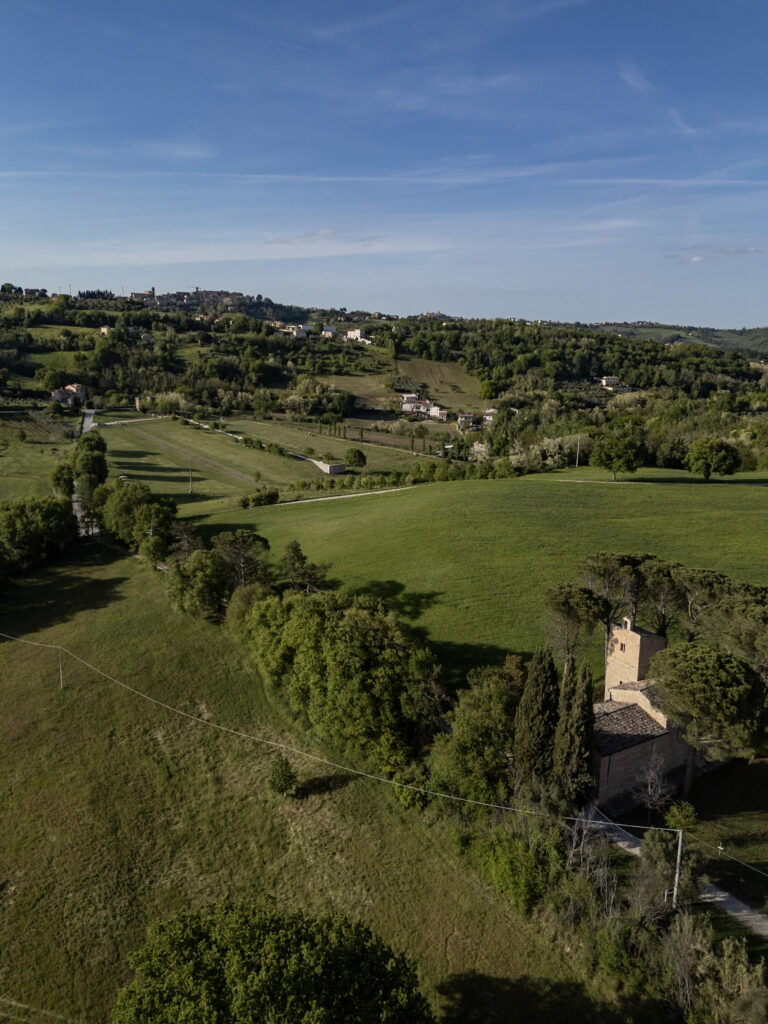
Falerio Picenus
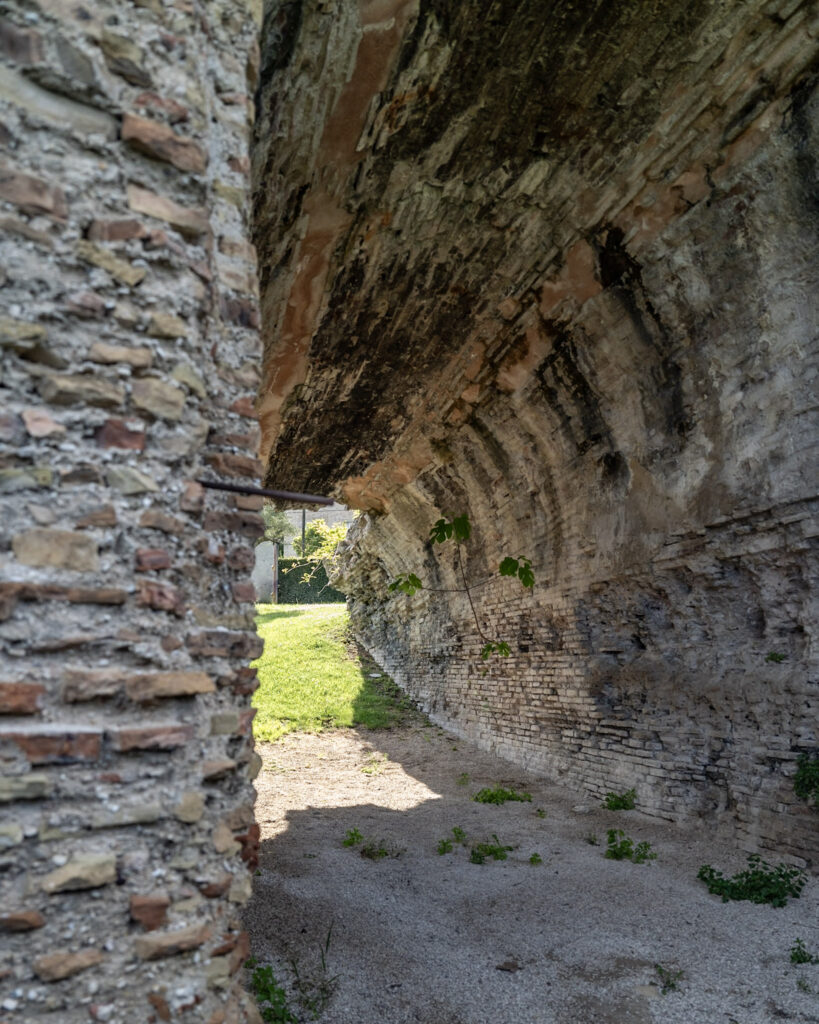
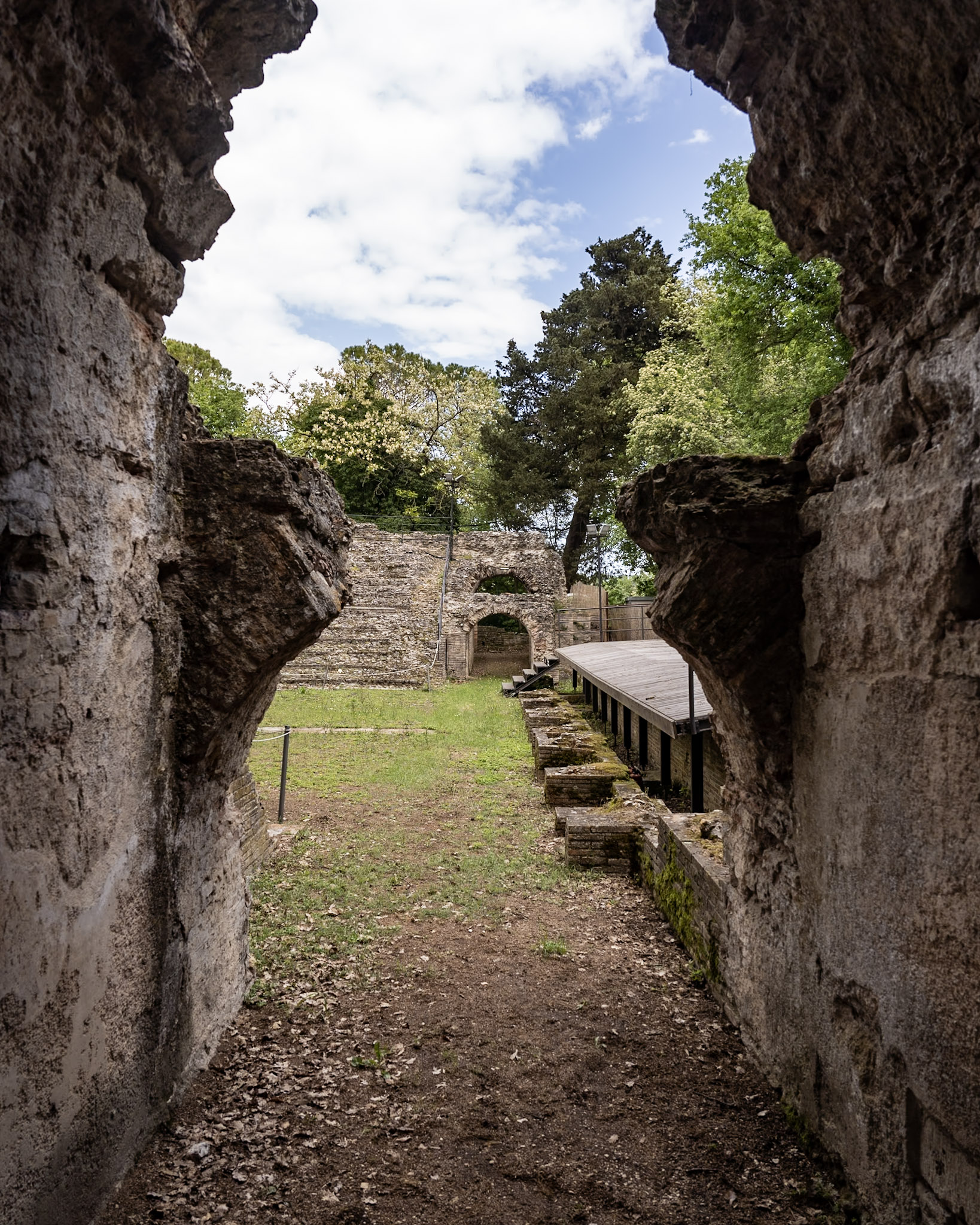
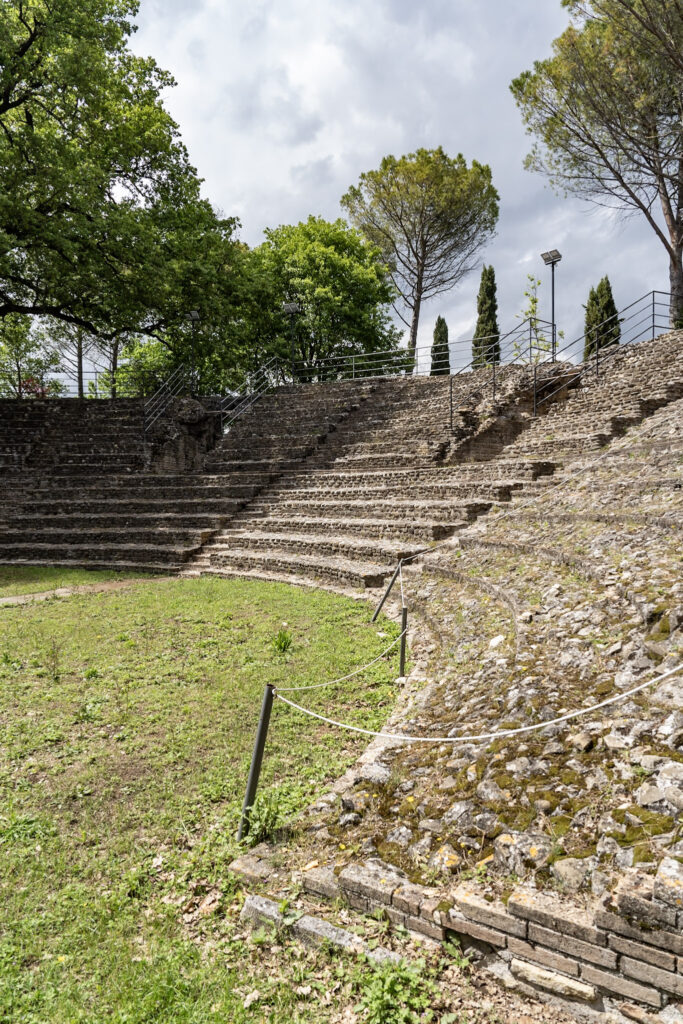
After the warlike episode of 90 BCE, related to the well-known social war, a settlement of some importance arose in Falerone as early as the Triumviral period (in Caesar’s time, around 49 BCE).Of this early phase, however, little is known, as it was largely overshadowed by the city’s later monumental development under Augustus and his successors. Here, in fact, Octavian Augustus settled a contingent of veterans who had supported him in the defeat of Antony and Cleopatra at Actium in 31 BCE. These veterans were rewarded not only with land, but also with urban facilities that enabled them to live as in Rome, enjoying the same rights and quality of life as the inhabitants of the capital. As a result, Falerio was provided with paved streets, an elegant theatre, a temple whose podium still emerges among the old houses of the town, no fewer than two imposing cisterns—one of them particularly refined, once decorated with marble and statues—an amphitheatre, and, as recent research has revealed, even a monumental forum comprising a porticoed building, an apsidal structure, and a large square. The city’s former splendour is further attested by the imposing funerary monuments that accompanied—and still accompany—travellers on the road toward Servigliano.
After the Roman Age
With late antiquity and the early Middle Ages came the abandonment of Falerio Picenus, and the population sought refuge in sheltered places. These were the times of the barbarian invasions, but also of a central power in crisis, no longer able to manage health emergencies or ensure the safety of the population exposed to economic, climatic and political changes. In such circumstances, even the maintenance of roads and public buildings was very difficult. Falerio Picenus had risen and flourished in the centuries of the pax Romana, a prosperous period in which episodes of warfare would never have been expected, at least not on the Italian peninsula.
Times had changed: it became necessary to find more secure and defensible positions, perched on higher ground. Thus Falerone was established, in a position both scenic and secure.
Between Goths and Lombards
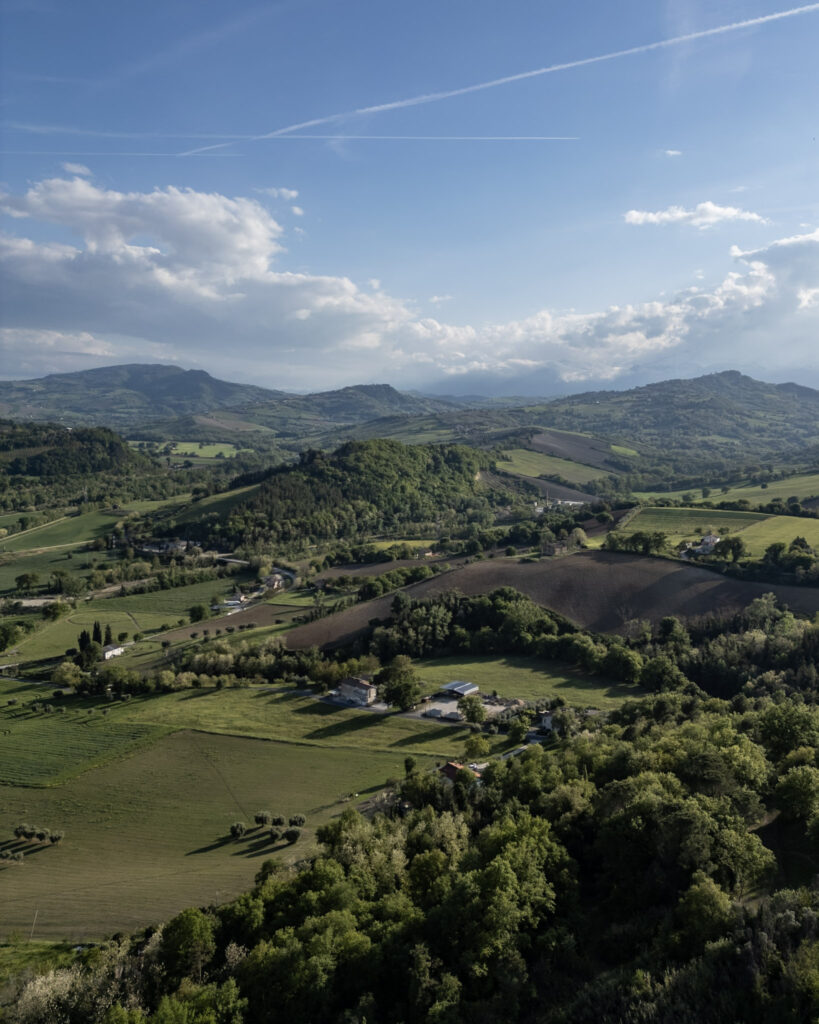
One of the periods of greatest crisis was marked by a long and bloody conflict fought between 435 and 453 CE between the Byzantines and the Goths (the so-called “Greek–Gothic War”). It is striking to think that the fields that so harmoniously surround you today—those hills adorned with beautiful sunflowers—once witnessed unprecedented violence that plunged the entire peninsula, including the Marche region, into deep crisis.
The real end of Antiquity is by many historians and archaeologists identified with the arrival in Italy of the Lombards, a people originally from the Jutland Peninsula (present-day Denmark). They came to conquer much of the Italian peninsula—giving their name to the region of Lombardy—and left clear traces of their presence in Falerone.
The Lombard past of Falerone is certain, but research has yet to do much in this regard. One of the most important documents is the famous Volveto stele. Originally a Roman burial slab, it was reused as a tombstone for Volveto and later saw a third use—before being housed in a museum—as an altar mensa. Volveto was an important official in the management of the territory during the Lombard age, and the inscription mentions none other than King Desiderio (757-774 CE) and his son Adelchi, the very Adelchi made famous by Manzoni. The epigraph, dating to 770 CE, bears the earliest known refernce to the Duchy of Fermo, established by Desiderio himself to curb the expansionist appetites of the duchies of Spoleto and Benevento.
Falerio Picenus: An Inextricable Umbilical Cord
After centuries of abandonment, the Piane area, having regained stability and security, was once again settled by the population due to its extremely favorable location for trade and communications, although it remained poorly defensible.
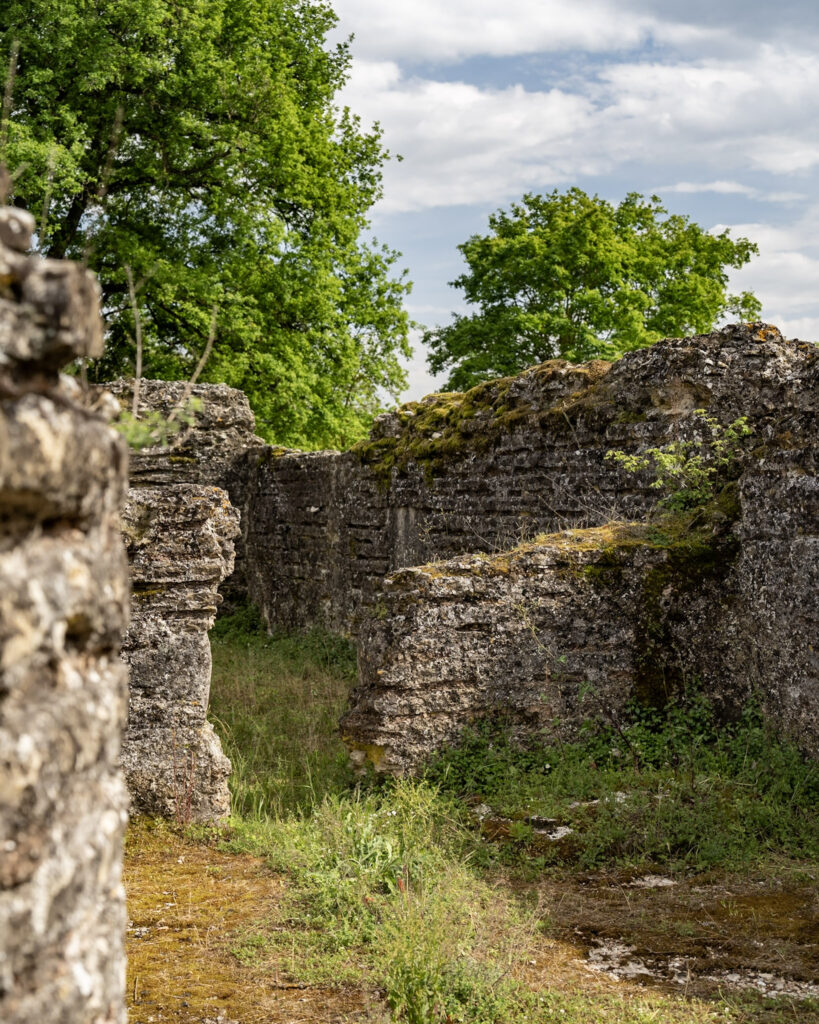
They had probably always remained in sight, although partly collapsed—the theater, the amphitheater, and the Bagni della Regina. Certainly, as they cultivated the fields, other relics of the Roman city emerged, and the materials were reused by the new inhabitants as building elements for their homes.
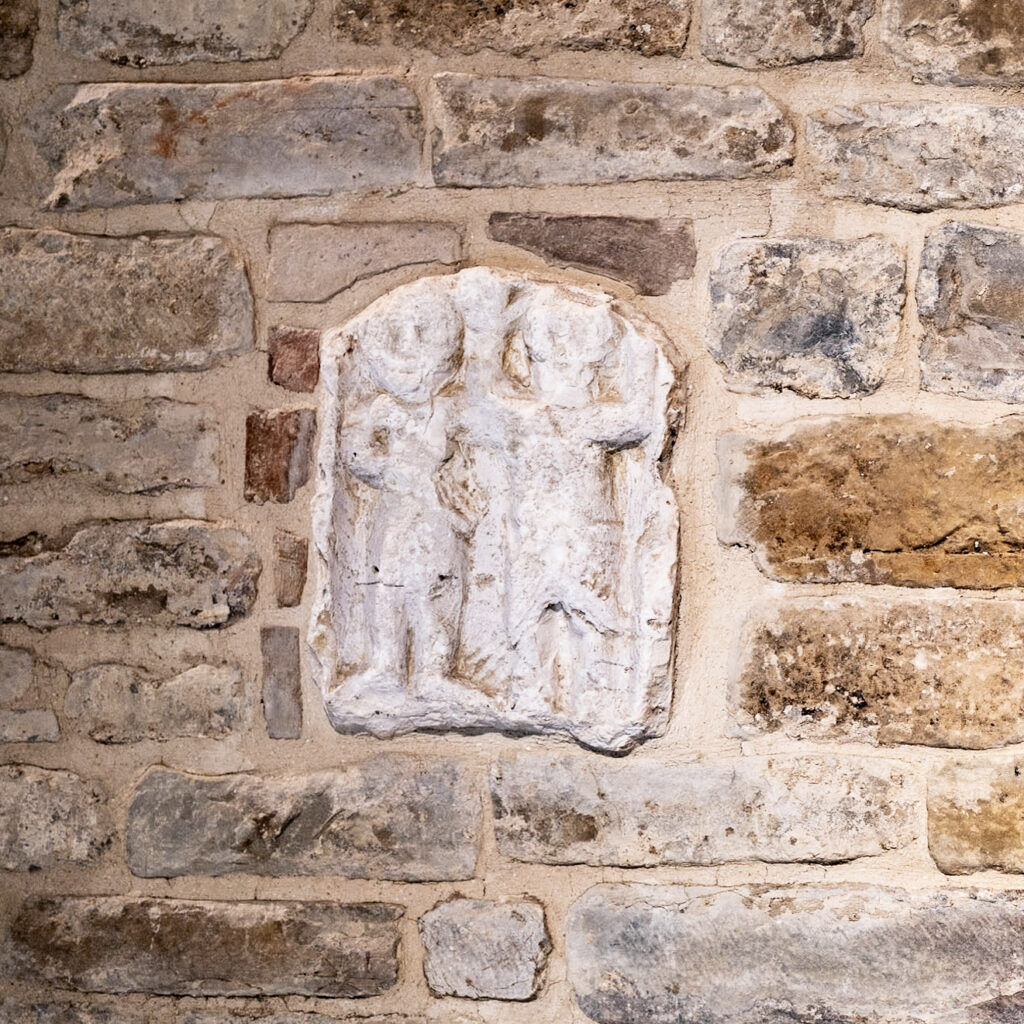
Architectural elements and fragments of inscriptions can still be seen embedded among the oldest houses in the village, but extraordinary 19th- and early 20th-century testimonies are also preserved in moving family photographs, set against walls full of Roman relics. They testify to the enduring bond—then as now—between the inhabitants and their glorious past.
In fact, numerous studies show that the practice of reusing ancient materials likely originated in a utilitarian perspective, linked to immediate needs, but it always carries deeper meanings—almost like a stony admonition: “Remember that you were a great city.”
Research History
As we have seen, Falerio Picenus may have had a pre-Roman past, although evidence for this remains circumstantial. It became a Roman settlement of some importance during the Triumviral Age, but it was later overshadowed by the monumental projects commissioned here by Augustus and his successors, when the first emperor of Rome decided to settle a group of his veterans from the Battle of Actium and establish Falerio Picenus as a colony.
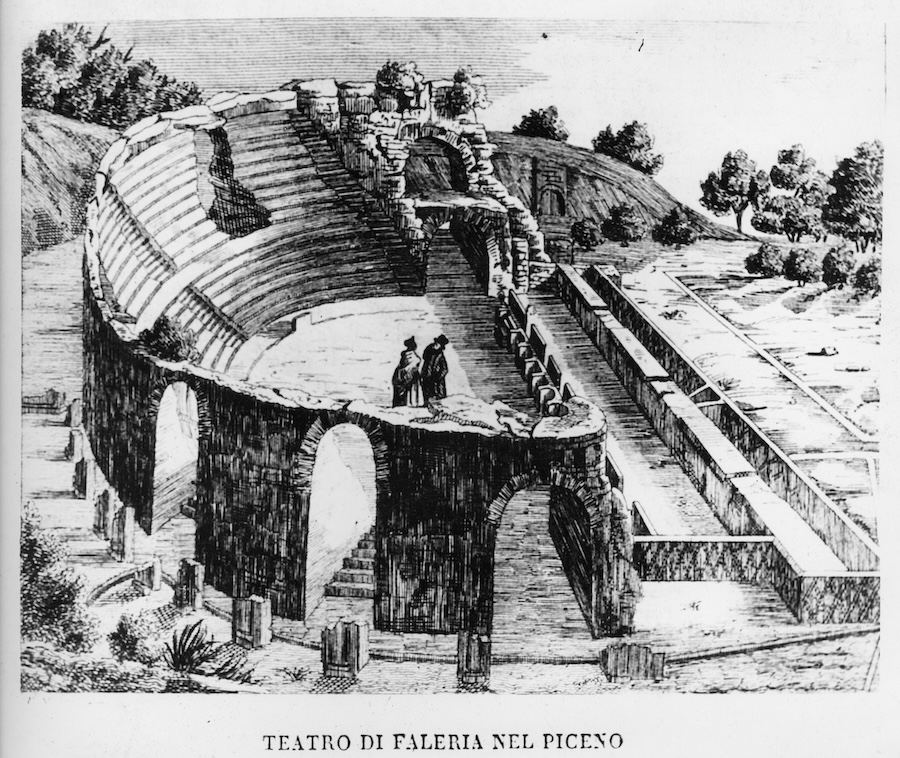
In order to obtain land to give to the newcomers, however, Augustus had to take some from nearby Fermo, sparking a centuries-old dispute. The birth of Faleriense Archaeology is closely linked to this episode, with the 1595 discovery of a long inscribed bronze tablet (the so-called “rescritto”), in which Emperor Domitian (81-96) sought to put an end to the clash between Falerienses and Fermani over the management of a series of unallocated lands during the land rearrangement process. The dispute was not resolved—Pliny the Younger was involved a few years later as an advocate for Fermo—but this very important document attracted papal attention to the site. The tablet was donated to Pope Clement VIII, who promoted the first excavations—admittedly poorly documented—carried out by Cardinal Pietro Aldobrandini. After a two-century hiatus, research resumed only in 1777 under Pope Pius VI (1775-1799), who focused particularly on the theatre, considered extremely promising due to the exceptionally well-preserved state of its structures. At that time, the third order of the cavea was still visible, and the interior remained decorated with marble and even bronze elements—amazingly surviving the metal-hungry periods of late antiquity and the early Middle Ages. The most interesting finds were taken to Rome, ultimately housed in the Pio Clementino Museum, one of the main sections of the Vatican Museums. Yet again, the purpose of the excavations was to acquire beautiful materials rather than to reconstruct the history of Falerio Picenus; once the excavators deemed the dig no longer profitable, the site was abandoned.
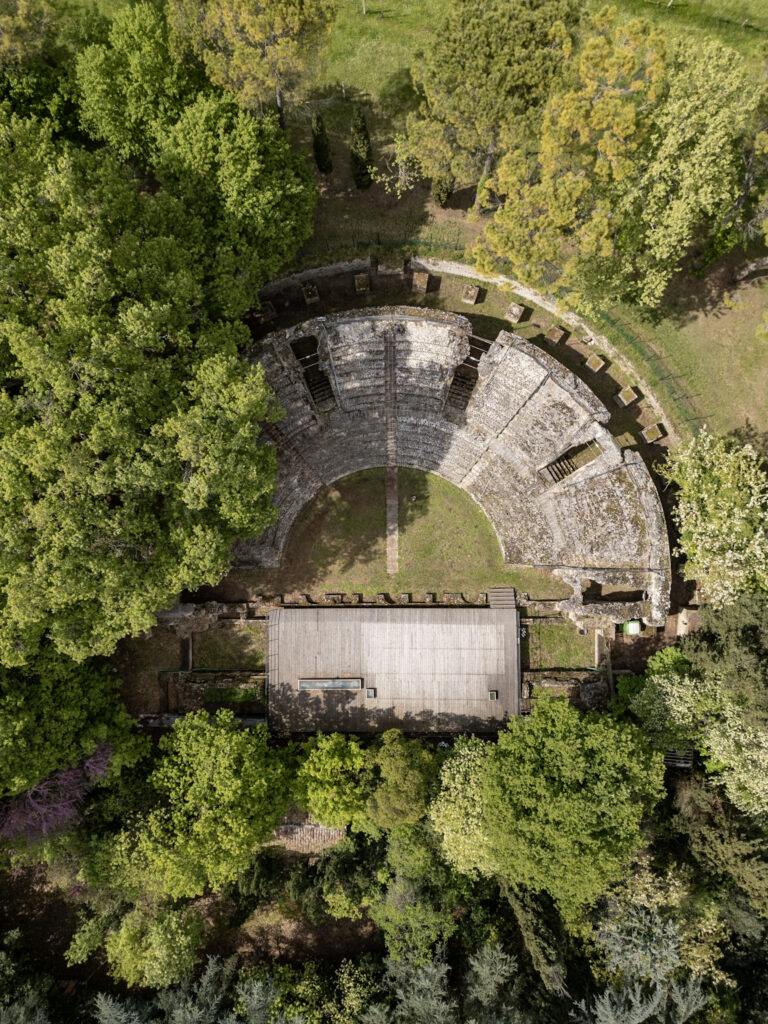
In the 19th century, research was resumed by two brothers from Fermo, but of Falerone origin, Gaetano and Raffaele De Minicis, who resumed excavations in 1836, with more noble purposes than in the previous century: to restore glory to the ancient Roman city and to provide new data to scholars of ancient architecture. The operations also involved the amphitheatre and other buildings in the city, but they focused precisely on the theatre that the 18th-century excavators had deemed “exhausted”, ”—and they struck gold! They found epigraphs, three marble statues of deities, two telamons (the male version of the caryatid), several architectural elements and fragments of column coverings. These artifacts went on to form the private museum of the De Minicis brothers—though it was not entirely legitimate, since they had excavated without pontifical authorization and, when caught, were forced to promise to establish a museum in Falerone, not in their own home in Fermo. The collection was soon broken up by their nephew Pietropaolo, and today fragments of Falerio can be found not only in Falerone and Fermo, but also in Ancona, Florence, Arezzo, Genoa, and even the Louvre in Paris! Decades of fortuitous discoveries in the field followed, but not systematic research on the city or punctual research on any aspect/building of it, until Pompilio Bonvicini’s incessant work from the 1950s onward. The latter, although not trained as an academic archaeologist, collected a great deal of invaluable evidence of a country that was changing and in danger of erasing its past with uncontrolled development. He was also awarded the title of honorary inspector of the Superintendency, and he carried out dozens of archaeological and archival researches that are still valuable today. Finally, after important synthesis papers (such as L. Maraldi’s), and some detailed papers on individual aspects of the research (e.g., L. Maraldi’s. that of G. Paci and G. Montali on the theatre; G. Paci who collected various studies in a valuable volume of 1995; the proposed three-dimensional reconstruction of the theater by I. Váli and Z. Ordasi, in collaboration with S. Cecchi), research resumed in 2021 thanks to an agreement signed by the Municipality of Falerone with the Soprintendenza Archeologia Belle Arti e Paesaggio of the Marche Region and the University of Bologna (F. Grilli, E. Giorgi, with the collaboration of P. Storchi). A research and enhancement project that produced the most comprehensive documentation through careful assessment of the city’s main monuments, developed tools for their use in tourism, resumed archaeological excavations, and—thanks to discoveries revealed by anomalies in aerial photography—enabled a new interpretation of the Roman city.
Work Team:
Superintendence: F. Belfiori, F. Grilli, T. Sabbatini
Unibo: F. Carbotti, V. Castignani, E. Giorgi, G. Guarino, F. Pizzimenti, P. Storchi (later Unipv).
Freelancers: P. Blockley, G. Canuti, G. Mete, L. Tampieri
Team I excavation campaign: A. Brunacci, A. Brusa, I. Garbelli, S. Tarini, G. Vignaroli

